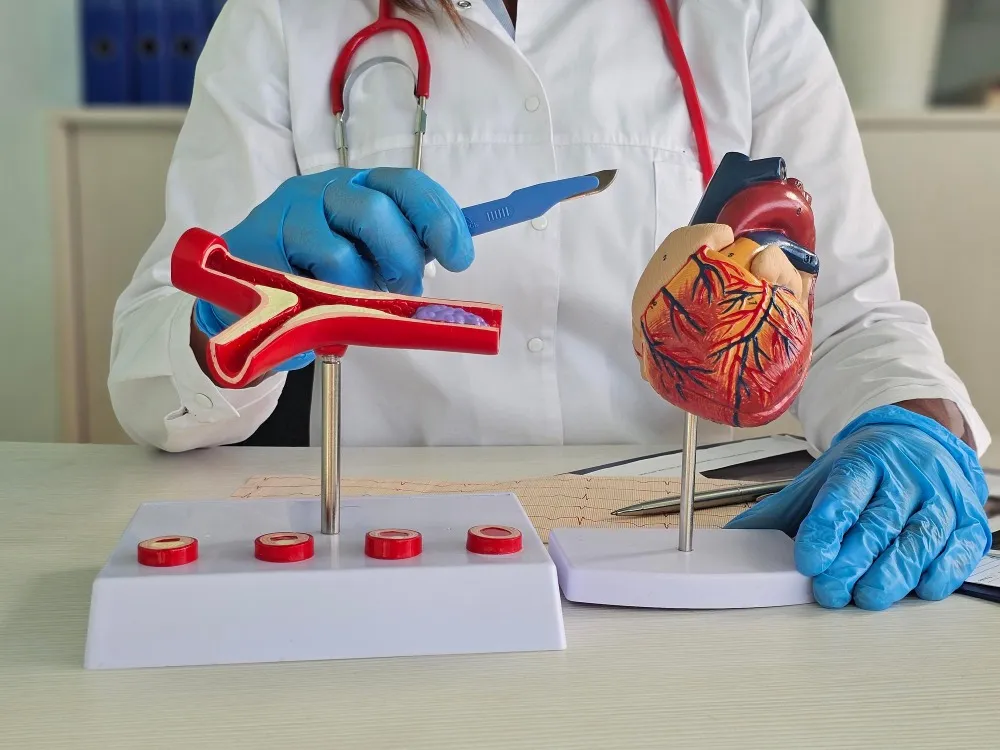
When fatty deposits build up inside the coronary arteries, blood flow to the heart muscle can become restricted. Some patients can be managed effectively with medication and lifestyle measures, while others may require a procedure to restore adequate blood supply.
Coronary Intervention refers to catheter-based treatment used to evaluate and treat significant narrowing or blockage in coronary arteries. It is frequently associated with angioplasty and stent placement, although the exact procedure depends on the type and complexity of coronary disease.
For patients in Navi Mumbai, understanding why an intervention is recommended can reduce uncertainty after an abnormal stress test, coronary angiogram or diagnosis of coronary artery disease.
Symptoms That Can Lead to Investigation
Coronary artery disease does not produce identical symptoms in every patient.
Possible warning signs include:
- Pressure, tightness or discomfort in the chest
- Breathlessness during physical activity
- Unexplained reduction in exercise tolerance
- Pain spreading toward the arm, jaw, shoulder or back
- Sweating or nausea associated with chest discomfort
- Symptoms occurring repeatedly during exertion
Some people, particularly those with diabetes, may have less typical symptoms.
Sudden or severe chest discomfort can represent a medical emergency and should not be managed as a routine outpatient concern.
Diagnosis Comes Before Intervention
Not every coronary blockage needs a stent.
The cardiologist considers symptoms, ECG findings, blood tests, heart function and non-invasive investigations before deciding whether coronary angiography is necessary.
An angiogram shows the location and severity of narrowing in the coronary arteries. In certain situations, additional physiological or intravascular imaging assessment may help determine whether a particular narrowing is clinically important.
This information guides treatment selection.
What Happens During Coronary Intervention
The procedure is performed through a catheter inserted into an artery, commonly through the wrist or groin.
The catheter is advanced toward the coronary arteries. If a significant narrowing requires treatment, a thin wire is passed across the affected segment.
A balloon may be used to widen the artery. A stent can then be positioned to help maintain blood flow.
Complex coronary disease may require additional devices, imaging techniques or specialised strategies depending on calcification, vessel anatomy and the location of the blockage.
Intervention Is Only Part of Treatment
A successfully treated blockage does not eliminate the underlying tendency toward coronary artery disease.
Long-term management remains essential.
This may include:
- Antiplatelet medication when prescribed
- Cholesterol-lowering treatment
- Blood pressure management
- Diabetes control
- Smoking cessation
- Appropriate physical activity
- Heart-healthy nutrition
- Regular cardiac follow-up
Stopping prescribed antiplatelet medication after stent placement without medical guidance can be dangerous.
Treatment Must Match the Individual
A single-vessel narrowing in one patient can require a different strategy from extensive multivessel disease in another.
Some patients benefit from medication alone. Others may be candidates for coronary intervention, while certain patterns of complex coronary disease may be better treated with bypass surgery.
For people across Navi Mumbai, Maharashtra, treatment decisions should therefore be based on coronary anatomy, symptoms, heart function, other illnesses and expected clinical benefit rather than the presence of a blockage alone.
Dr. Rajesh Matta provides interventional cardiology evaluation at Anahat Heart Center for patients with suspected or established coronary disease. Coronary Intervention is most useful when it is selected for the right clinical reason and combined with ongoing risk-factor management to protect cardiovascular health beyond the procedure itself.
Keywords