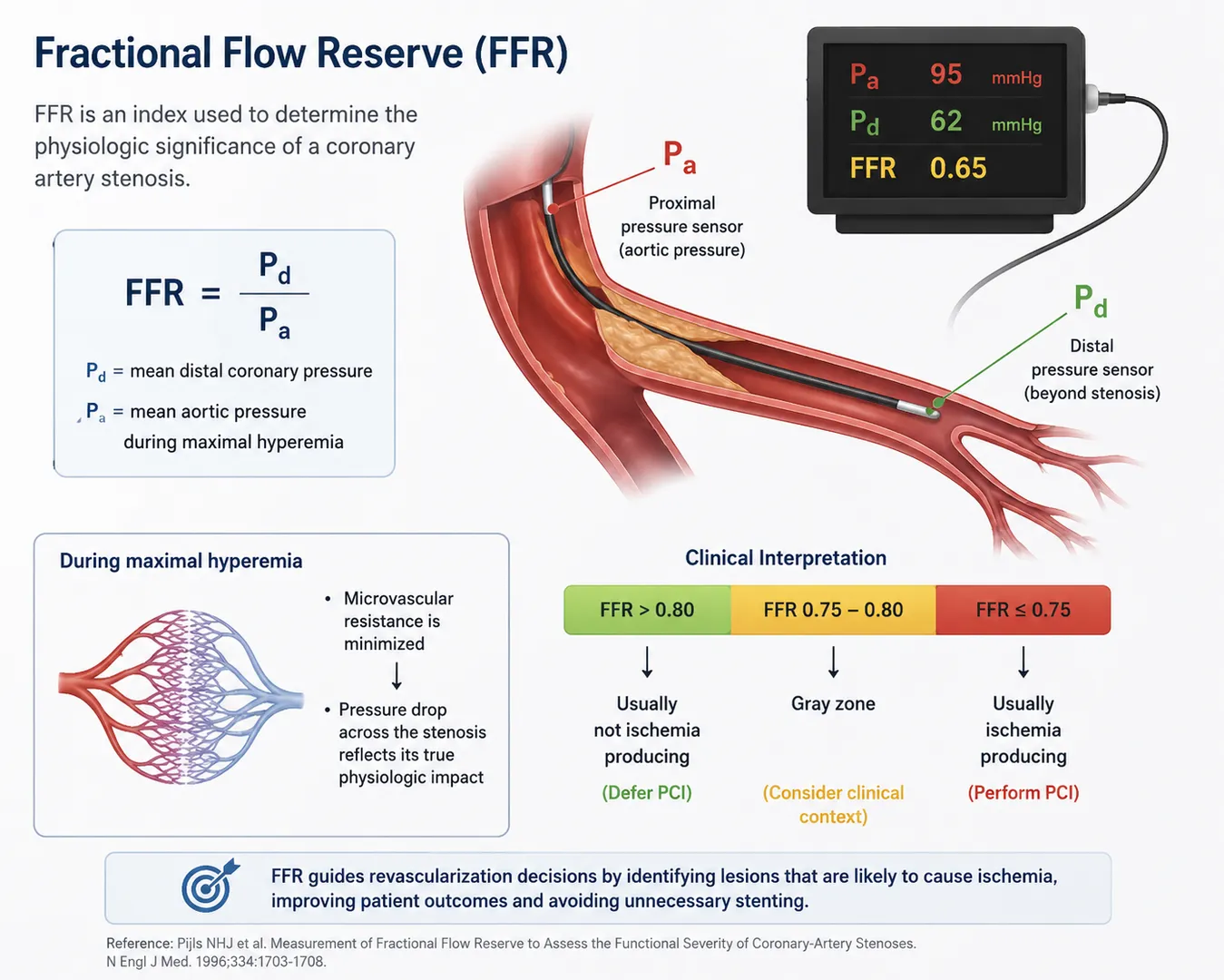
Not every narrowing seen during an angiogram requires a stent. That's where Fractional Flow Reserve (FFR) has changed the way cardiologists make treatment decisions. Instead of relying only on how a blockage looks, FFR measures how much it actually affects blood flow to the heart muscle.
During the procedure, a specialized pressure wire is gently passed across the narrowed artery. This helps determine whether the blockage is truly limiting circulation or if it can be managed safely with medications and lifestyle changes. It's a simple concept, but one that can prevent unnecessary interventions while ensuring significant blockages receive timely treatment.
Patients often ask, 'If there's a blockage, shouldn't it always be opened?' The answer isn't always yes. Some blockages appear severe on imaging but don't significantly reduce blood flow. Others may look moderate yet cause substantial restriction. FFR helps answer that question with objective, real-time data.
In Navi Mumbai, advanced physiological assessment is becoming an important part of modern cardiac care. Rather than treating every narrowing, the focus is on treating the ones that truly matter.
Dr. Rajesh Matta believes precision leads to better outcomes. By combining coronary imaging with physiological assessment like FFR, treatment decisions become more personalized, reducing unnecessary procedures while improving long-term heart health.
Heart disease isn't just about what can be seen—it's also about understanding how the heart functions. That's exactly where FFR adds value.
If you've been advised to undergo coronary evaluation or are considering treatment for blocked arteries, consult Dr. Rajesh Matta in Navi Mumbai to learn whether Fractional Flow Reserve (FFR) can help guide the most appropriate treatment for your condition.
Keywords