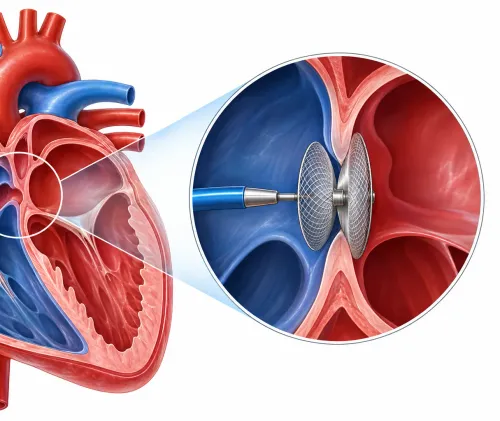
Blood clots that develop in the deep veins of the legs or pelvis can become dangerous if they travel to the lungs. This condition, known as pulmonary embolism, can interfere with blood flow through the lungs and may become life-threatening in severe cases.
IVC Filter Implantation is one treatment option that may be considered for selected patients at significant risk of pulmonary embolism, particularly when standard blood-thinning treatment cannot be used effectively or safely.
Patients seeking cardiovascular care in Navi Mumbai may encounter the term IVC filter during treatment for deep vein thrombosis, major bleeding, trauma, surgery or recurrent clotting problems.
What Is an IVC Filter
IVC stands for inferior vena cava, the large vein that carries blood from the lower part of the body back toward the heart.
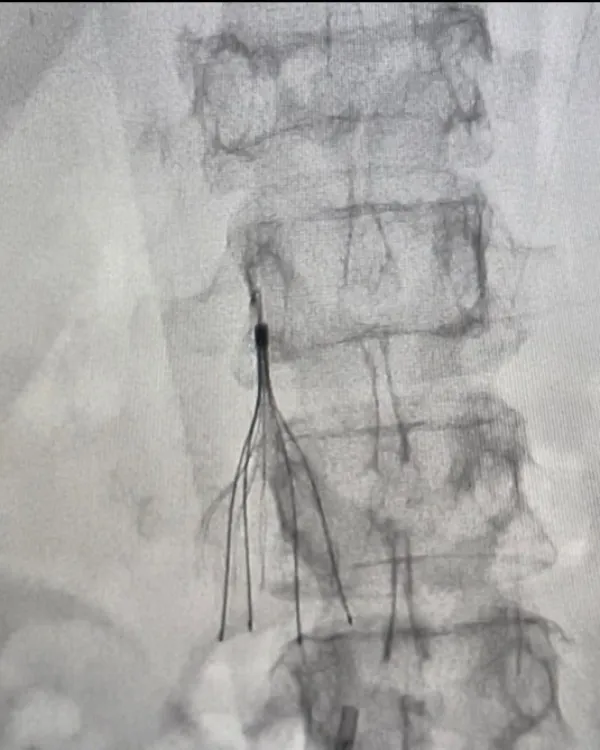
An IVC filter is a small device positioned inside this vein. Its purpose is to trap certain blood clots travelling from the lower extremities before they can reach the lungs.
The filter does not treat the original clot in the leg. Instead, it provides a mechanical barrier intended to reduce the risk of a significant clot reaching the pulmonary circulation.
When Implantation May Be Considered
Anticoagulant medicines are commonly used for deep vein thrombosis and pulmonary embolism. These medications help prevent existing clots from enlarging while reducing the likelihood of new clot formation.
However, anticoagulation may not be suitable in every situation.
IVC filter placement may be evaluated when a patient has:
- Acute venous thromboembolism with a contraindication to anticoagulation
- Significant active bleeding that prevents anticoagulant use
- Certain complications associated with anticoagulant treatment
- Specific high-risk clinical circumstances requiring specialist assessment
An IVC filter should not be viewed as a routine replacement for anticoagulation. The reason for considering the filter must be clearly established.
What Happens During Implantation
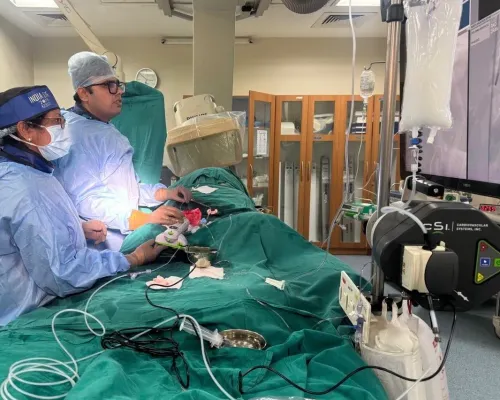
IVC filter implantation is usually performed using a catheter-based technique.
A catheter is inserted through an appropriate vein and guided into the inferior vena cava using medical imaging. Once the correct position is confirmed, the filter is deployed inside the vein.
The procedure generally requires only a small vascular access site rather than open surgery.
The exact approach depends on the patient's anatomy, clinical condition and the type of filter being used.
Temporary Filters Require Planning
Some IVC filters are designed to be retrievable. When the medical reason for having the filter is no longer present, removal may be considered.
This makes follow-up especially important.
Patients should know:
- Why the filter was inserted.
- Whether the device is intended to be retrievable.
- When reassessment should take place.
- Whether anticoagulation can later be restarted.
- What imaging or clinical monitoring is required.
Losing follow-up after filter placement can make long-term management more complicated.
Risks Need Individual Assessment
As with any invasive cardiovascular procedure, IVC filter implantation has potential risks. These can include access-site complications, filter movement, filter-related thrombosis, penetration of the vein wall or difficulty with later retrieval.
The likelihood and significance of these complications differ from patient to patient.
For people receiving treatment in Navi Mumbai, Maharashtra, coordination between the treating physician, interventional specialist and other relevant medical teams is important because patients requiring an IVC filter often have complex underlying conditions.
Dr. Rajesh Matta provides assessment for patients requiring interventional cardiovascular care at Anahat Heart Center. When IVC Filter Implantation is being considered, the key question is not simply whether the device can be placed, but whether its expected benefit outweighs its risks for the individual patient.
Keywords