Have you ever felt a sudden flutter in your chest, a skipped beat, or a bout of dizziness, only for everything to seem perfectly normal by the time you reach the doctor's office?
Heart rhythm issues (arrhythmias) can be elusive. Because a standard EKG only records your heart for a few seconds, it often misses symptoms that come and go. This is where Holter Monitoring becomes an essential tool in modern cardiology.
What is a Holter Monitor?
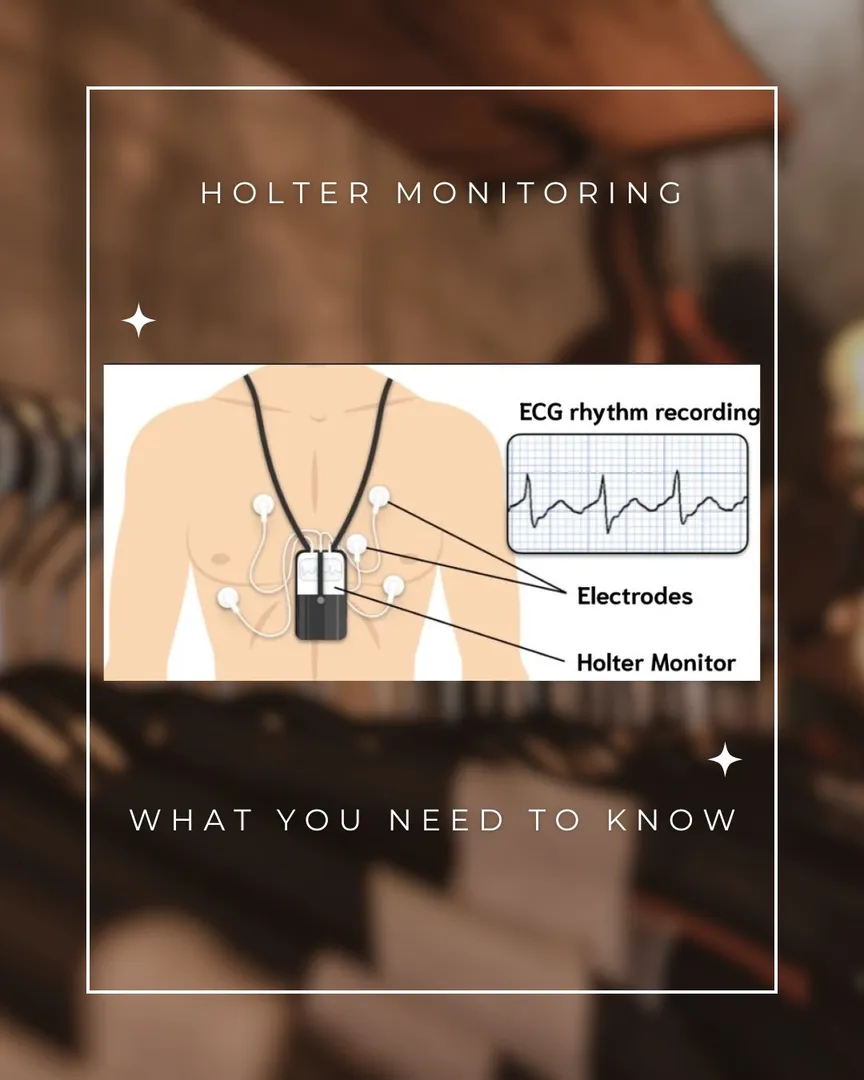
A Holter Monitor is a small, wearable medical device that records your heart’s electrical activity continuously for 24 to 48 hours (and sometimes longer). Think of it as a movie of your heart’s rhythm, whereas a standard ECG is merely a snapshot.
By wearing the device during your normal daily routine—including exercise and sleep we can capture irregularities that only occur under specific conditions.
Why Do You Need One?
As cardiologists, we typically recommend Holter monitoring to investigate symptoms that aren't constant. Common reasons include:
Unexplained Palpitations: Feeling like your heart is racing, pounding, or 'flipping.'
Fainting or Near-Fainting: Determining if a drop in heart rate is causing dizziness (syncope).
Monitoring Treatment: Checking if a new heart medication or a recent pacemaker implantation is working effectively.
Hidden Arrhythmias: Identifying conditions like Atrial Fibrillation (AFib), which can increase stroke risk even if symptoms aren't felt.
What to Expect During the Test
The process is simple, painless, and non-invasive. Here is what the experience looks like at our clinic:
1. Setup: A technician attaches small, sticky patches (electrodes) to your chest. These connect via wires to a lightweight recording device.
2. The Monitor: The device is roughly the size of a deck of cards and can be clipped to your belt or carried in a small pouch.
3. Your Diary: We ask you to keep a simple log of your activities and any symptoms you feel (e.g., '10:30 AM: Felt dizzy while climbing stairs').
4. Normal Routine: You are encouraged to go about your usual day. The only restriction is that you cannot get the device wet, so sponge baths are a must!
Turning Data Into Results
Once you return the device, our cardiology team analyzes thousands of heartbeats. We correlate the data with your symptoms log to see exactly what your heart was doing at the moment you felt a flutter.
This precise data allows us to create a customized treatment plan, whether that involves lifestyle changes, medication, or further specialized procedures.
'A Holter monitor provides the clarity needed to move from 'I think something is wrong' to 'Here is exactly how we fix it.''
Book Your Heart Health Screening
Don't ignore the signs your heart is sending you. If you’ve been experiencing irregular heartbeats or unexplained fatigue, it’s time for a professional evaluation.
Heart rhythm issues (arrhythmias) can be elusive. Because a standard EKG only records your heart for a few seconds, it often misses symptoms that come and go. This is where Holter Monitoring becomes an essential tool in modern cardiology.
What is a Holter Monitor?
A Holter Monitor is a small, wearable medical device that records your heart’s electrical activity continuously for 24 to 48 hours (and sometimes longer). Think of it as a movie of your heart’s rhythm, whereas a standard ECG is merely a snapshot.
By wearing the device during your normal daily routine—including exercise and sleep we can capture irregularities that only occur under specific conditions.
Why Do You Need One?
As cardiologists, we typically recommend Holter monitoring to investigate symptoms that aren't constant. Common reasons include:
Unexplained Palpitations: Feeling like your heart is racing, pounding, or 'flipping.'
Fainting or Near-Fainting: Determining if a drop in heart rate is causing dizziness (syncope).
Monitoring Treatment: Checking if a new heart medication or a recent pacemaker implantation is working effectively.
Hidden Arrhythmias: Identifying conditions like Atrial Fibrillation (AFib), which can increase stroke risk even if symptoms aren't felt.
What to Expect During the Test
The process is simple, painless, and non-invasive. Here is what the experience looks like at our clinic:
1. Setup: A technician attaches small, sticky patches (electrodes) to your chest. These connect via wires to a lightweight recording device.
2. The Monitor: The device is roughly the size of a deck of cards and can be clipped to your belt or carried in a small pouch.
3. Your Diary: We ask you to keep a simple log of your activities and any symptoms you feel (e.g., '10:30 AM: Felt dizzy while climbing stairs').
4. Normal Routine: You are encouraged to go about your usual day. The only restriction is that you cannot get the device wet, so sponge baths are a must!
Turning Data Into Results
Once you return the device, our cardiology team analyzes thousands of heartbeats. We correlate the data with your symptoms log to see exactly what your heart was doing at the moment you felt a flutter.
This precise data allows us to create a customized treatment plan, whether that involves lifestyle changes, medication, or further specialized procedures.
'A Holter monitor provides the clarity needed to move from 'I think something is wrong' to 'Here is exactly how we fix it.''
Book Your Heart Health Screening
Don't ignore the signs your heart is sending you. If you’ve been experiencing irregular heartbeats or unexplained fatigue, it’s time for a professional evaluation.
Keywords