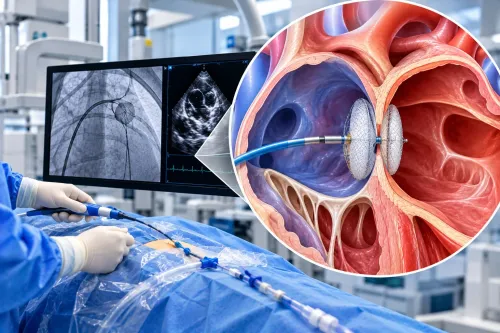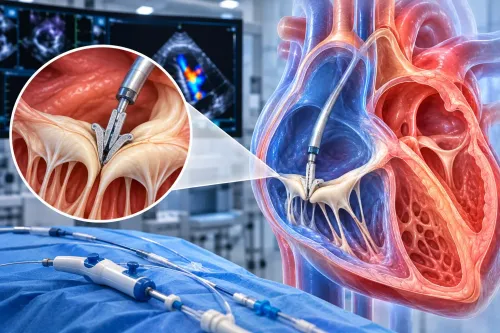
A narrowed coronary artery limits the oxygen-rich blood reaching heart muscle, especially when your heart works harder. You will learn how the balloon and stent change the artery, how doctors decide whether PCI is suitable, and what affects recovery, repeat narrowing and long-term protection.
Key takeaways
- Angioplasty uses a balloon to widen a narrowed coronary artery.
- Drug-eluting stents help keep treated arteries open after PCI.
- Doctors compare symptoms, artery anatomy and blood-flow tests before recommending PCI.
- Medicines or bypass surgery can be better choices in selected cases.
How a Balloon Opens a Narrowed Coronary Artery
Plaque inside a coronary artery reduces its available channel. At rest, the remaining passage may deliver enough oxygen to the heart muscle; during walking, climbing or other exertion, demand rises faster than supply. This oxygen mismatch can cause chest pressure or discomfort that settles when exertion stops and demand falls.
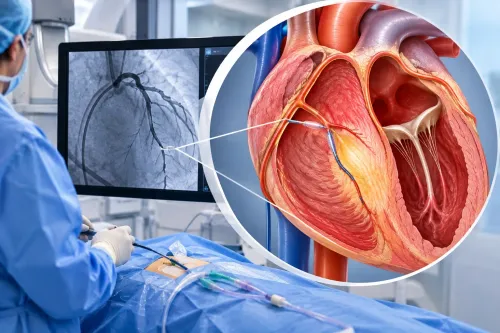
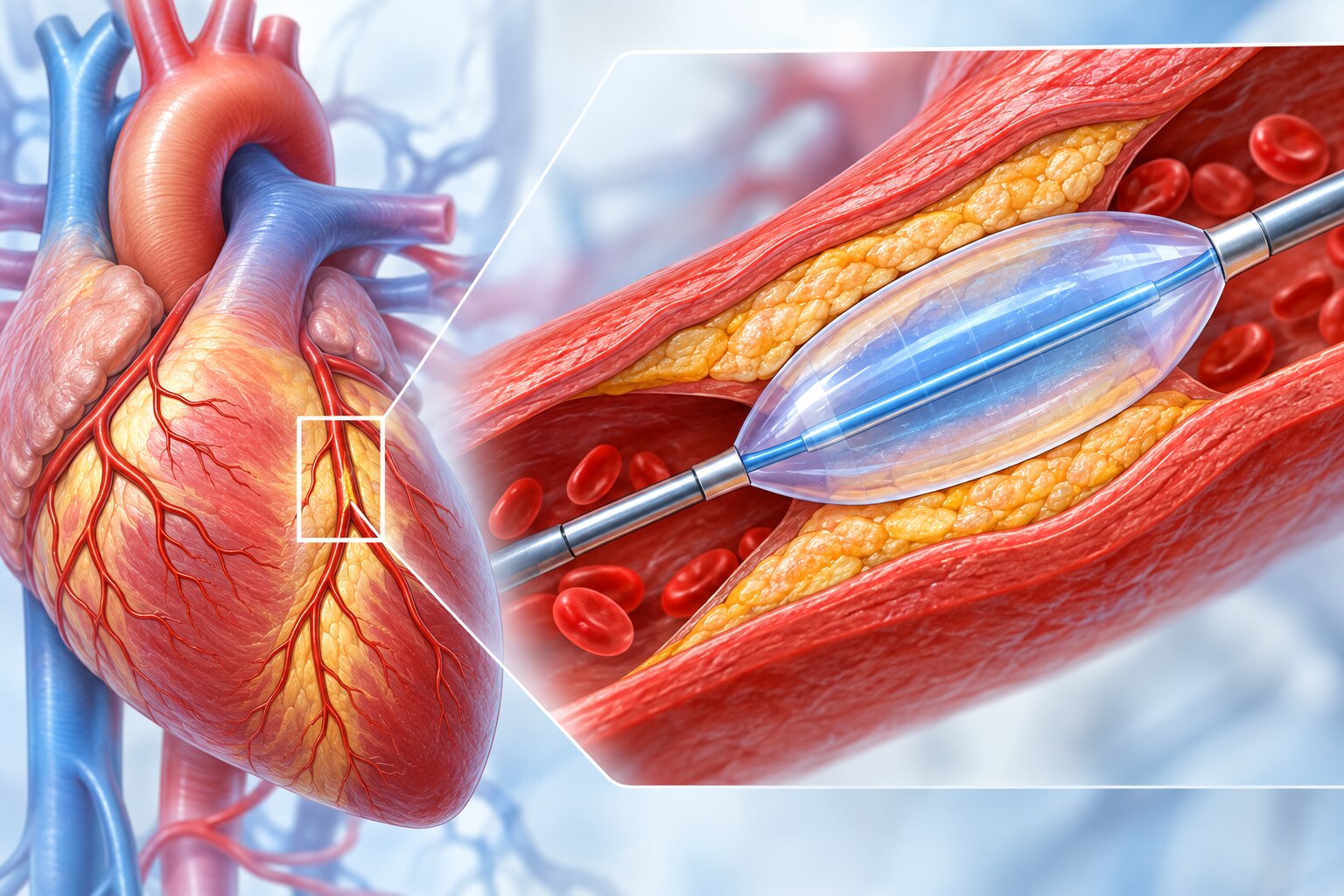
- During PTCA, formally percutaneous transluminal coronary angioplasty, the operator guides a catheter through the radial artery at the wrist or the femoral artery in the groin toward the coronary artery.
- A thin guidewire passes across the coronary artery narrowing. The operator advances a small, deflated balloon mounted on a catheter over this wire.
- The balloon inflates at the narrowed segment. Pressure produces plaque compression and redistribution against the artery wall, while stretching the vessel to enlarge the channel. The plaque is not removed from your body.
- The balloon deflates and leaves through the catheter, creating a wider passage for blood. A stent may remain to support the artery.
PCI treats the specific flow-limiting lesion opened during the procedure, not every source of chest discomfort. Symptoms can persist because another narrowing, coronary spasm, small-vessel disease or a non-cardiac condition is responsible.
Why Most Angioplasty Procedures Add a Drug-Eluting Stent
Balloon angioplasty versus stent placement is the difference between widening an artery temporarily and supporting it afterward. A balloon can compress plaque and stretch the vessel, but the artery may recoil soon after treatment. Tissue can also grow into the treated area, causing restenosis.
| Option | What happens | Main limitation or advantage |
|---|---|---|
| Balloon-only angioplasty | A catheter balloon widens the narrowed segment, then is removed | No permanent implant, but recoil and repeat narrowing are more likely |
| Bare-metal stent | A metal scaffold props open the artery | Less tissue growth control than a drug-eluting stent |
| Drug-eluting stent | A metal scaffold releases an antiproliferative medicine | Limits tissue growth and has largely replaced bare-metal stents in PCI |
A balloon-only procedure remains an option when a stent does not suit the vessel or lesion, the anatomy makes implantation difficult, or avoiding a permanent implant matters. The treating team weighs that choice against the risk of recoil and repeat narrowing.
A stent creates an ongoing need for antiplatelet treatment. Patients generally receive aspirin plus a P2Y12 inhibitor, but the drugs and duration depend on the reason for PCI, bleeding risk, clotting risk and other treatments. Never stop either medicine without direction from your treating clinician, especially after stent placement.
How Doctors Decide Whether PCI Will Improve Blood Flow
PCI is most useful when a narrowing matches your symptoms and demonstrably restricts blood flow, not merely because it looks tight on an angiogram. For planned PCI in stable coronary artery disease, clinicians combine:
- Your symptom pattern, including exertional chest pressure or breathlessness, with ECG findings.
- Stress-test evidence of ischemia, showing that part of the heart is receiving too little blood during demand.
- Coronary CT angiography or invasive angiography to map the narrowing.
- Left-ventricular function, the lesion’s location and the affected vessel’s size.
- FFR and iFR when an intermediate-looking lesion is uncertain. These measurements test whether the narrowing actually limits flow; angiography alone can misclassify severity.
STEMI is different. During an acute artery blockage, primary PCI aims to restore flow quickly rather than wait for a planned assessment. The 2025 ACC/AHA/ACEP/NAEMSP/SCAI goals are first medical contact to device within 90 minutes for direct presentation to a PCI-capable hospital, or within 120 minutes when transfer is required.
Symptoms at rest, prolonged chest pressure, breathlessness, sweating or fainting require emergency services, not a routine appointment.
When Medicines, PCI or Bypass Surgery Makes More Sense
Do not treat every narrowing with a stent. Medicines, exercise, smoking cessation and control of blood pressure, cholesterol and diabetes make sense when symptoms are controlled and testing shows no flow-limiting lesion worth opening. They remain necessary after PCI because angioplasty treats one obstruction, not the atherosclerosis affecting your arteries.
| Option | Durability and anatomy | Recovery and trade-off |
|---|---|---|
| Medicines | Best when symptoms and ischemia are controlled; avoids procedure risk | No procedural recovery, but requires long-term treatment and monitoring |
| PCI | Directly treats a selected obstructive lesion; restenosis or another procedure remains possible | Usually shorter recovery than surgery; less suitable for diffuse disease or incomplete treatment |
| CABG | Creates a route around disease and can be more durable for multivessel coronary disease, complex left-main disease or unsuitable anatomy | Longer recovery than PCI, but may provide more complete revascularisation |
Angioplasty versus bypass surgery depends on vessel pattern, left-ventricular function, kidney function, bleeding risk and overall health—not the angiogram alone. A blockage that does not explain symptoms is another reason to avoid intervention. Dr. Rajesh Matta can help you review whether PCI versus medicines or CABG matches your test results and realistic recovery priorities.
Pain can persist after PCI if spasm, small-vessel disease, another narrowing or a non-cardiac cause is responsible.
Related service
Coronary Angiography & Angioplasty Coronary Angiography & Angioplasty At Anahat Advanced and Comprehensive Cardiac Clinic, Dr. Rajesh Matta provides advanced care for heart blockages through Coronary Angiography and... View service → |
What to Prepare for Before and After the Procedure
Before PCI, follow the fasting instructions exactly. Bring a complete medication list, including doses and last times taken, and discuss every anticoagulant and diabetes medicine with the team. Report any previous contrast reaction and complete kidney-function testing when requested.
1. Before the procedure, review consent, bleeding risk and access-site options. Radial access through the wrist generally causes fewer bleeding and vascular complications; femoral access through the groin remains useful when wrist access is unsuitable or larger devices are needed.
2. Protect your kidneys by telling the team about chronic kidney disease, diabetes, dehydration, heart failure and kidney-stressing medicines. Clinicians check renal function, limit unnecessary contrast and use hydration when safe. Contrast-associated acute kidney injury is a particular concern in these situations.
3. Afterward, take prescribed antiplatelet medicines after stent placement, usually aspirin plus a P2Y12 inhibitor. Never stop either without the treating clinician’s direction. Seek urgent care for recurrent or worsening symptoms, bleeding, or growing wrist or groin swelling.
Serious complications are uncommon but include bleeding, artery dissection or perforation, stent thrombosis, heart attack, stroke, contrast-associated acute kidney injury, allergic reaction and death.
Long-term protection requires prescribed statin therapy when indicated, blood-pressure and diabetes control, smoking cessation, exercise and cardiac rehabilitation. Routine stress testing is not automatically useful after uncomplicated PCI; new symptoms or reduced exercise tolerance need assessment for restenosis or another cause.
Frequently asked questions
How does a balloon open a narrowed coronary artery?
A catheter guides a small balloon to the narrowed section. Inflation presses plaque against the artery wall and widens the channel so blood can flow more freely.
Why is a drug-eluting stent often added during angioplasty?
The stent supports the artery after balloon inflation. A drug-eluting stent releases medicine that reduces tissue growth inside the stent, lowering the risk of the artery narrowing again.
How do doctors decide whether PCI will improve blood flow?
They assess your symptoms, scan the coronary arteries and evaluate whether each narrowing restricts blood flow enough to explain your symptoms. The decision also considers the location and length of the blockage.
When are medicines, PCI or bypass surgery used?
Medicines can be appropriate when symptoms are controlled and blood flow is adequate. PCI can help when a treatable narrowing causes symptoms or urgent loss of blood flow. Bypass surgery can make more sense for complex, extensive or difficult-to-treat disease.